Thoughtful Horsemanship and Training
  • Home
  • Contact Us
  • Virtual Coaching
  • Virtual Courses
  • In Person Lessons/Clinics
  • Horses for sale
  • Blog
  • FAQ's
  • Fundamentals Of Thoughtful Horsemanship
  • Beginner Weekly review
  • Reviews

The Truth About “Good Horses” (That No One Likes to Admit)

3/17/2026

0 Comments

 
Picture
Hi Horse friends,

Let’s talk about a word that gets thrown around a lot in the horse world:

“Good.”

“He was so good today.”
“She’s always such a good mare.”
“That’s a bad habit.”

Seems harmless, right?

But here’s the slightly uncomfortable question…

What if “good” doesn’t actually mean what we think it means?

Most of the time, when someone says a horse is “good,” what they really mean is:
  • The horse didn’t resist

  • The horse stayed quiet

  • The horse did what was asked… without a fight

And listen — I get it. We all want that.

But here’s where it gets interesting…

Quiet doesn’t always mean confident.
Obedient doesn’t always mean understanding.

Sometimes, it just means the horse has learned:
“It’s easier not to try.”


Now before anyone grabs their pitchforks….
This isn’t about blaming riders.

This is about awareness.

Because there’s a big difference between:
  • A horse that is mentally with you
    vs
  • A horse that has simply checked out

Here’s a thought to take with you next time you’re with your horse:

If your horse could vote on the ride… would they choose it again?

Not because they have to.
But because they feel safe, understood, and clear.


Some signs your horse is truly with you (not just “being good”):
  • They respond softly, not stiffly
  • They stay engaged without constant pressure
  • They recover quickly when something startles them
  • There’s curiosity… not just compliance

And here’s the part that tends to spark debate…

A horse that questions you isn’t always a problem.

Sometimes, that’s a horse that:
  • Is trying to understand
  • Is unsure
  • Or is finally comfortable enough to express an opinion
And honestly?

I’ll take that horse over one that has completely shut down.

So this week, instead of asking:


“Was my horse good?”


Try asking":

“Was my horse understanding me?”
  • “Was I clear?”
  • “Did we feel more connected than yesterday?”

I’d love to hear your thoughts on this one

Do you think we overuse the word “good” in horsemanship?
Or do you think it still has its place?

(And be honest — I know this one might split opinions a bit, and that’s okay.)


If you’re working through this with your own horse and want help creating more clarity without shutting them down, that’s exactly what we focus on inside the program.

Virtual lessons + full course available here:
thoughtfulhorsemanship.net
Talk soon,
Jamie


0 Comments

The pause is part of the training

2/24/2026

0 Comments

 
Picture
​There’s a moment in almost every ride that most people skip past. The pause. The few seconds after a transition. The breath before asking again. The stillness after your horse gives you something good. It feels small. Almost insignificant. But that pause? That’s where the learning settles. Horses don’t process the way we do. They don’t reflect later on what just happened. They learn in the release… and in the space that follows it. When we rush from one cue to the next, one maneuver to the next, one correction to the next, we accidentally blur the picture. Walk. Trot. Adjust. Fix. Ask again. Keep going. But what if, instead, you let the moment land? Ask for a soft stop. Feel the softness. Breathe. Let your body quiet. Let their body quiet. That stillness tells them: “Yes. That right there.” Some of the biggest breakthroughs don’t happen in motion. They happen in the seconds after. You might notice: • A deeper exhale • A lick and chew • A softening through the ribcage • An ear flick back toward you That’s processing. That’s understanding. That’s partnership forming. Progress doesn’t always look like forward movement. Sometimes it looks like quiet confirmation. So this week, experiment with less rush. Let the good moments breathe. See what changes when you allow space for your horse to think. You may be surprised how much more they offer when they’re given time to understand. As always, take what helps, leave what doesn’t, and keep listening to your horse. Talk soon, Jamie P.S. If you’ve ever felt like rides turn into “doing” instead of communicating, this is something we break down step-by-step inside Fundamentals of Thoughtful Horsemanship — how to use timing, release, and pauses intentionally so you’re not just riding… you’re teaching.

0 Comments

December 31st, 2025

12/31/2025

0 Comments

 
Picture
0 Comments

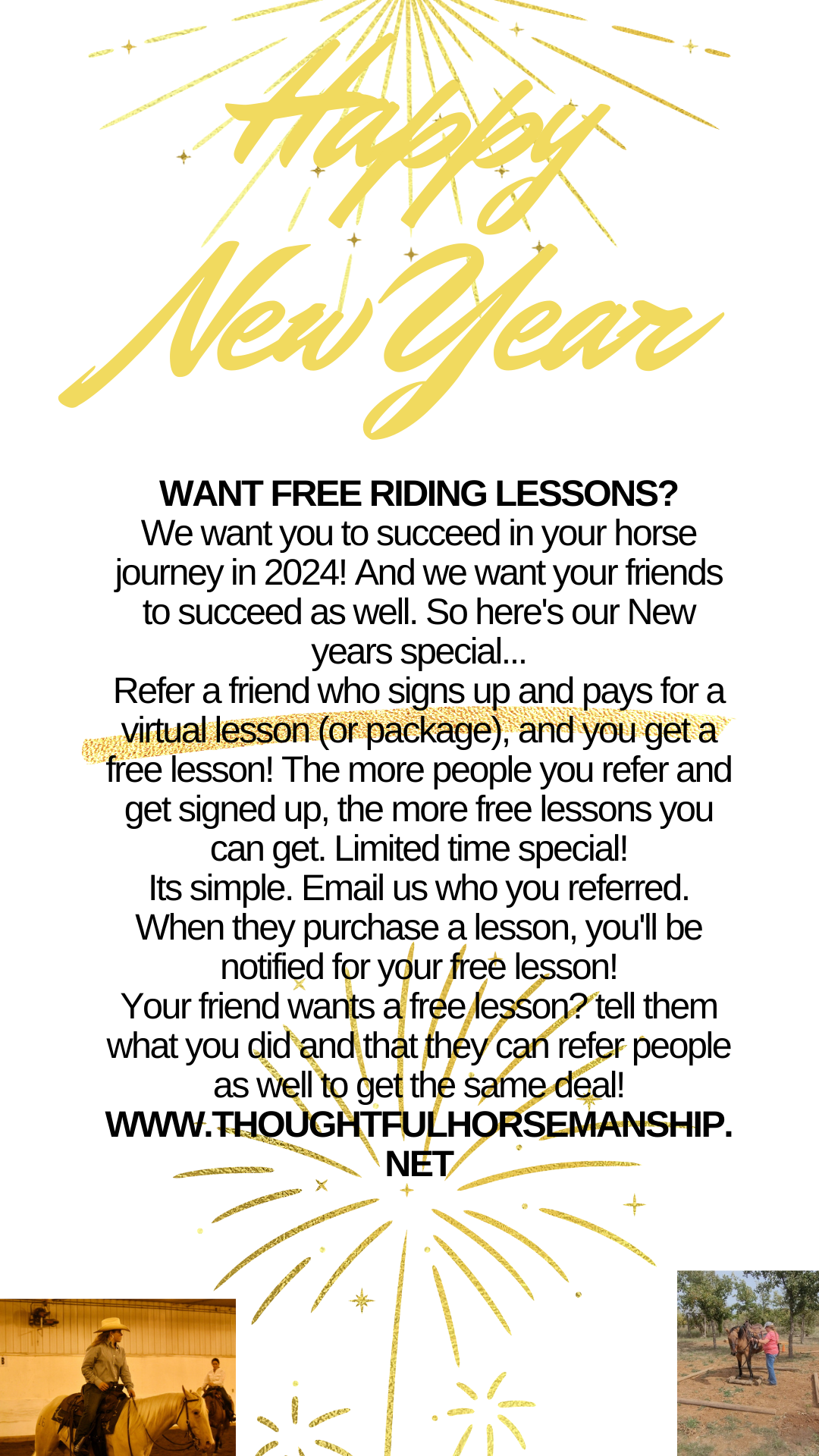
February 15 2024 Newsletter updates

2/15/2024

0 Comments

 
Picture
Picture
0 Comments

Jan 2, 2024

1/3/2024

0 Comments

 
Picture
Picture
Picture
0 Comments
<<Previous

    Jamie Bennett

    Jamie has years of experience with horses and loves to be able to pass on the information to other horse people. 

    Subscribe to Newsletter

    Categories

    All
    Oct 2023

    Archives

    March 2026
    February 2026
    December 2025
    February 2024
    January 2024
    December 2023
    November 2023
    October 2023
    August 2020
    March 2017
    October 2012
    September 2012
    August 2012
    May 2011
    April 2011

    Categories

    All
    Oct 2023

    RSS Feed

Proudly powered by Weebly

RSS Feed